
In the Saudi market, the decision to choose an app development company It is no longer only an "executive" decision; it is an operational and investment decision that affects sales, service, compliance, and future operating costs. This guide is practical and reference-oriented for decision-makers in Saudi Arabia and the Gulf: it explains the options, when to choose each one, what raises execution quality, and how to reduce project risk - without exaggeration or marketing promises.
Published on: Last updated: Prepared by: CloudX team
1) Defining the core concept
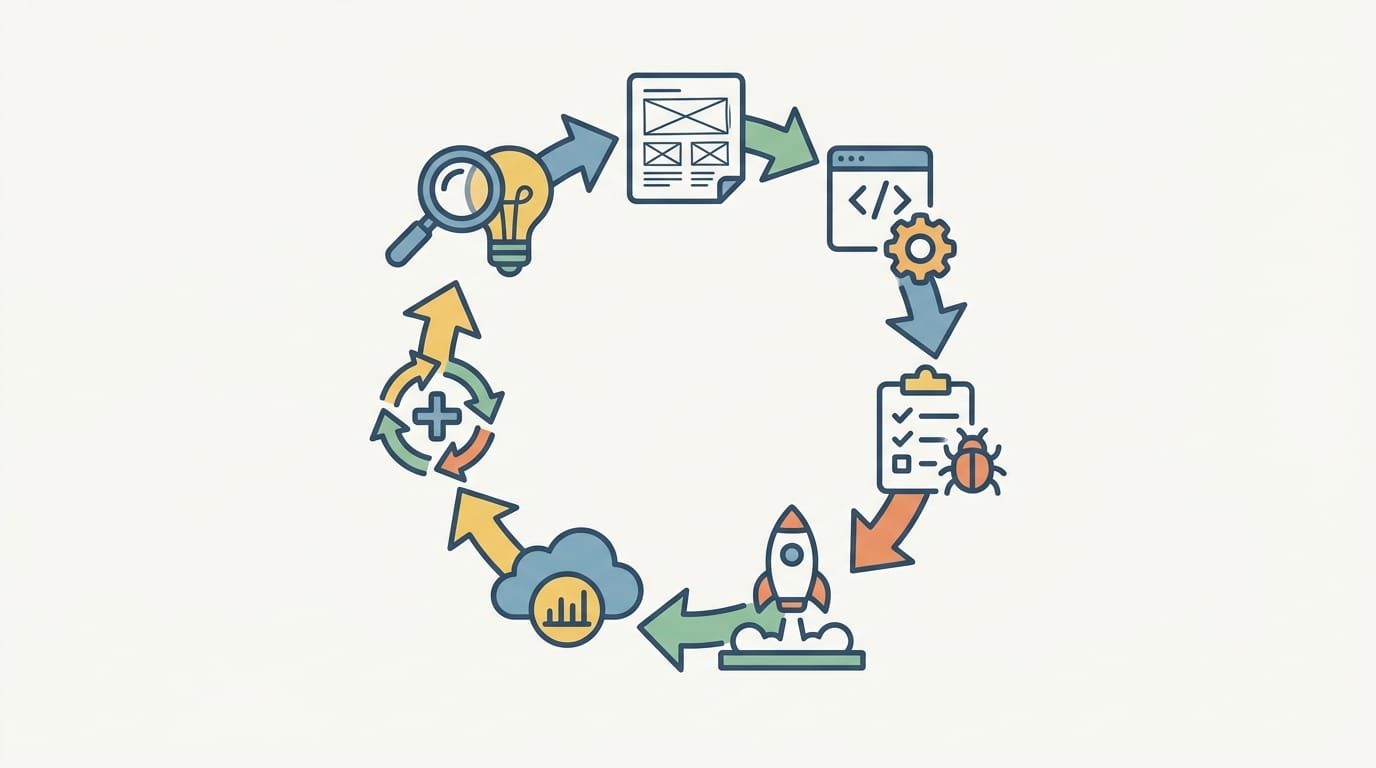
What is meant by an app development company (or a mobile app development company) is a multidisciplinary team responsible for turning business requirements into a digital product that runs on iOS and Android, including analysis, user experience, development, testing, integrations, publishing, and then continuous improvement. The difference between "an app that works" and "an app that drives growth" is often in the quality of analysis, design, security, and operations - not in the number of screens.
What do companies practically consider a "successful app"?
- A measurable outcome: More orders, fewer support calls, higher repeat purchases, and reduced processing time.
- Operational reliability: Stability, monitoring, contingency planning, and release management.
- Compliance and privacy: Data collection and retention policies, permissions, encryption, and access auditing - in line with PDPL where applicable.
- Scalability: The app and backend ecosystem’s ability to handle growth in users and requests.
Saudi and Gulf context: why is execution different?
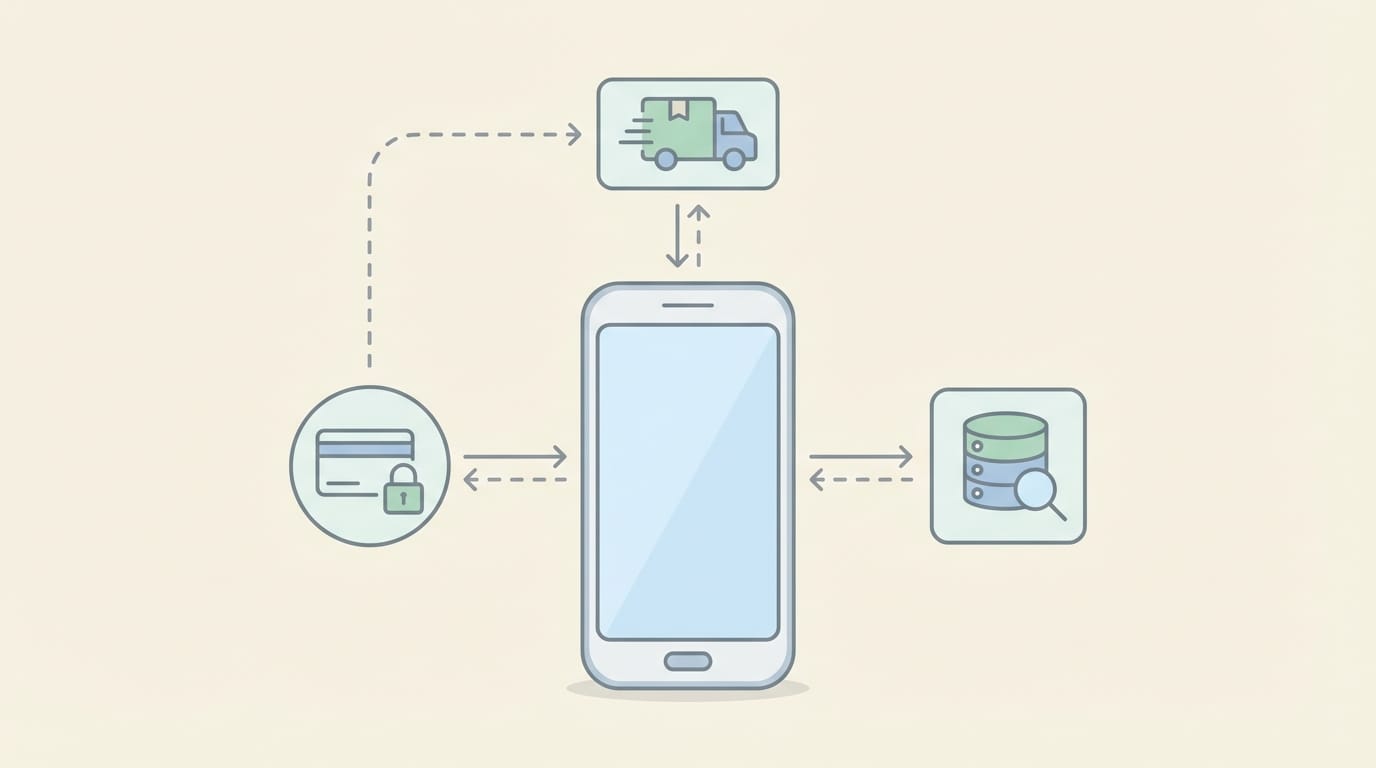
Because the app will often not be just an interface; it is part of a system that includes payments, shipping, invoicing, inventory, CRM, or ERP. Data and cloud governance requirements may also be affected by the sector (government/semi-government/financial/healthcare) and by rules of cloud service providers inside the Kingdom, such as Regulations for Providing Cloud Computing Services by CST.
2) Available options and when to choose each option
Before searching for the "best app development company," it is useful to define the execution model that fits your stage and operational capacity. The options below are common in Saudi Arabia and the Gulf, and each has a different risk-cost profile.
Core options
- In-house team: Suitable when the app is a core company product and you need high iteration speed and internal knowledge ownership.
- App development company (Outsourcing): Suitable when you want a fully integrated team quickly with operational experience and clear deliverables.
- Hybrid team: An internal core (Product/Tech lead) plus an execution company; common for reducing risk while preserving knowledge.
- Low-code/No-code platforms: Suitable for simple products or limited internal processes, but they may restrict integrations, security, and scalability.
Comparison table: when is each option suitable?
| Option | When it suits you | Common risks | Success indicators |
|---|---|---|---|
| In-house team | Core product + hiring budget + need for fast, continuous improvement | Hiring delays, skill gaps (UX/QA/DevOps) | Clear workflow, engineering standards, documentation |
| an app development company | You want a controlled launch and full specialist coverage quickly | Over-reliance on one provider, weak knowledge transfer | Documentation, code ownership, operating plan |
| Hybrid | You need strong governance while accelerating execution | Conflicting responsibilities, slow decisions without a RACI | Clear product owner, short decision meetings |
| Low/No-code | Rapid prototype or simple internal processes | Integration constraints, compliance difficulty, vendor lock-in | Narrow scope, limited security requirements |
If you are leaning toward delivering a full project through an external provider, review the service framework in to execute an integrated project to understand the expected scope of work (analysis, design, development, testing, deployment, and operations).
3) Business value and its impact on growth
A mobile app becomes a "growth lever" when it removes operational friction, opens a revenue channel, or measurably improves customer experience. For decision-makers, the question is not "How much does the app cost?" but: How will it change the trajectory of revenue, cost, and time?
Most common sources of value in Saudi Arabia and the Gulf
- Increase conversion: Simplify signup/payment, reduce ordering steps, improve speed.
- Reduce service cost: Order tracking, notifications, in-app help center.
- Increase repeat purchases and loyalty: Points programs, personalized offers (with privacy considerations).
- Improve operations: Link orders to inventory, delivery schedules, and driver/branch management.
- Better decision data: Measurement dashboards + usage events (Analytics) with clear data controls.
Practical metrics before and after launch
- Conversion rate from visit to order/booking
- Average order value (AOV) and purchase frequency
- Process completion time (such as creating an order or making a payment)
- Payment failure rate/cart abandonment rate
- Number of support tickets related to orders or login
For projects that require custom solution development with clear growth goals, the most important step is often aligning business requirements with a scalable architecture from day one.
4) Most commonly used types and models
Choosing the type directly affects cost, time, performance, and user experience. The most common models are:
1) Native apps
- iOS: Swift
- Android: Kotlin
- Best performance and experience with device features (camera/Bluetooth/location) and complex scenarios.
2) Cross-platform apps
- Usually Flutter or React Native.
- Suitable when you want faster launch with UI consistency, provided performance and testing are properly controlled.
3) Progressive Web App (PWA)
- It may be a good starting option for some cases, but it is not always a full substitute for a store app experience in performance-sensitive or integration-heavy scenarios.
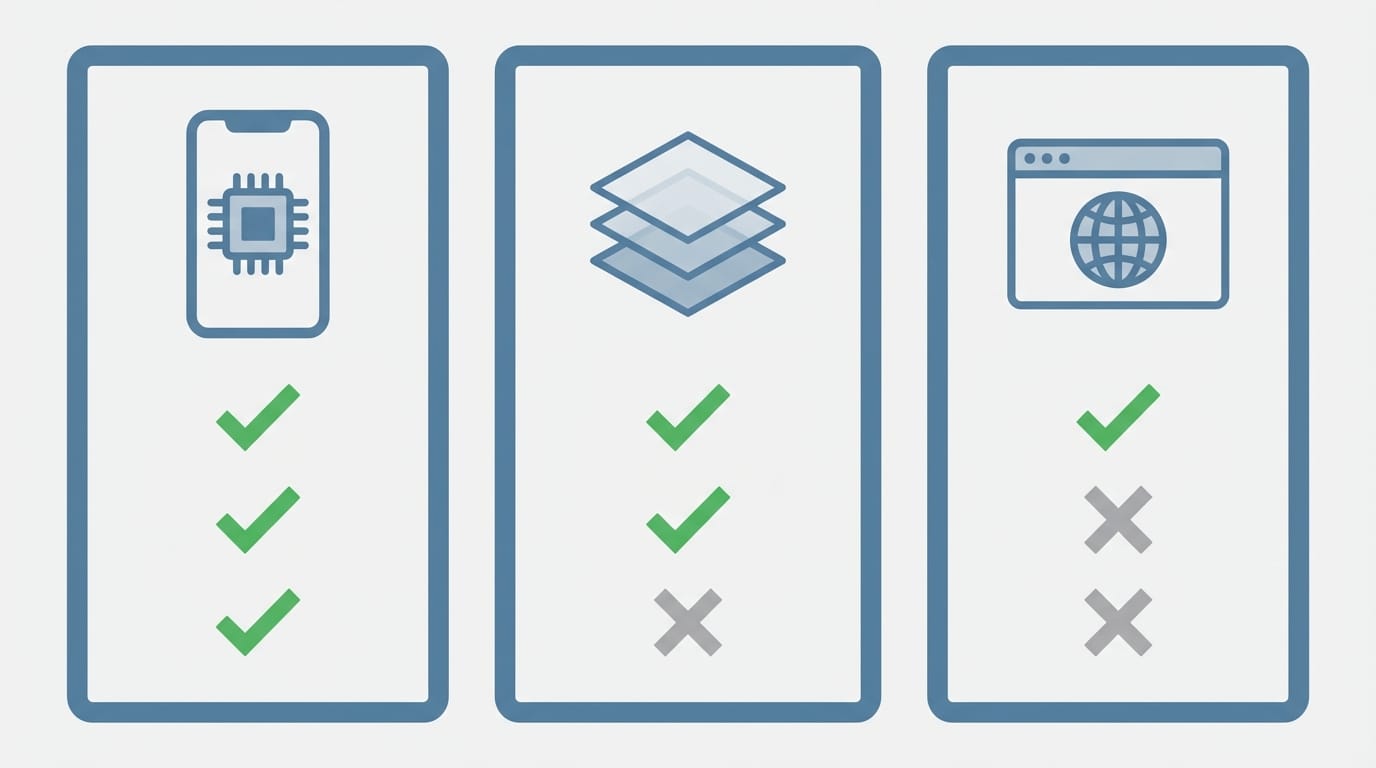
Comparison table: native vs cross-platform vs PWA development
| Item | Native | Cross-platform | PWA |
|---|---|---|---|
| Performance | Excellent (highest) | Very good to excellent depending on implementation | Varies by browser/device |
| Development speed | Relatively slower (two teams) | Usually faster (shared codebase) | Fast to start |
| Access to device features | Broadest | Broad, but it depends on plugins. | Limited. |
| Store experience | Complete. | Complete. | Not always at the same level. |
| Suitability for complex operational applications | High | High with strong engineering governance. | Medium |
A common model: a restaurant app as a reference point.
When managers look for a restaurant app, they often mean an ecosystem that includes: a menu, order customization, payment, preparation/delivery tracking, notifications, loyalty programs, and a branch management dashboard. This is where the difference appears between a front-end-only app and a complete product that integrates with POS, inventory, and delivery services.
5) User experience and its impact on conversion
User experience (UX) is not decoration; it is decision engineering that reduces hesitation and increases completion. In Saudi Arabia, where users rely on speed and trust especially during payment and delivery, any friction in registration, address selection, or payment directly affects conversion.
UX elements that directly affect revenue
- Time-to-Value: How can the user reach their first order/booking in the fewest steps?
- Price and fee clarity: Show delivery/tax/discount fees clearly before payment.
- Address reliability: Save addresses, validate them, and support map locations.
- Trust: Payment security indicators, return policies, order tracking, and in-app support.
Design decisions that reduce risk
- Design the cart-to-payment flow with clear failure states (network outage/gateway failure/decline).
- Enable multiple sign-up methods (phone/email) with security controls and abuse prevention.
- Manage mobile permissions carefully (location/photos) in compliance with platform policies; review privacy requirements of Apple.
If you have a small in-house team and need professional support in UX and execution, review Software company guide in Saudi Arabia as a complementary reference for selection governance and the collaboration model.
6) Core integrations (payments, shipping, internal systems)
Integrations are where complexity cost multiplies. An excellent app interface can still fail operationally if integrations are unstable or undocumented. In Saudi Arabia, the most sensitive integrations are often: Payments andShipping/Delivery andEnterprise systems.
Payments in Saudi Arabia: what do decision-makers ask?
- Support for local networks: such as mada depending on the business model and payment provider.
- Compliance and approvals management: In some scenarios, technical coordination/approvals are required with payment entities or through the payment provider, while considering relevant regulatory guidance such as SAMA Rulebook for linking transactions and supporting e-commerce payment services.
- Failure and recovery scenarios: What happens when the network drops? How do we prevent duplicate charges? How do we manage partial/full refunds?
Shipping/delivery: design points many teams overlook
- Address model (line/coordinates/coverage area) with serviceability validation by city/district.
- Delivery time (ETA) estimation and flexibility during peak times.
- Synchronizing order status between the app, control panel, and the delivery provider.
Internal systems (ERP/CRM/POS)
If the app is tied to inventory/pricing/customers, the priority is not just API integration; it is defining the source of truth: Does pricing come from the ERP? Or from a middleware pricing service? And who has edit authority? This decision reduces operational disputes later.
Electronic invoicing (when applicable)
Some business models need to account for e-invoicing requirements in the Kingdom, especially if the app generates invoices/receipts in a structured way. Start by reviewing the portal for Electronic invoicing (Fatoora) at ZATCA to build a clear picture of obligations before designing the invoice flow inside the app.
7) Performance, security, and scalability
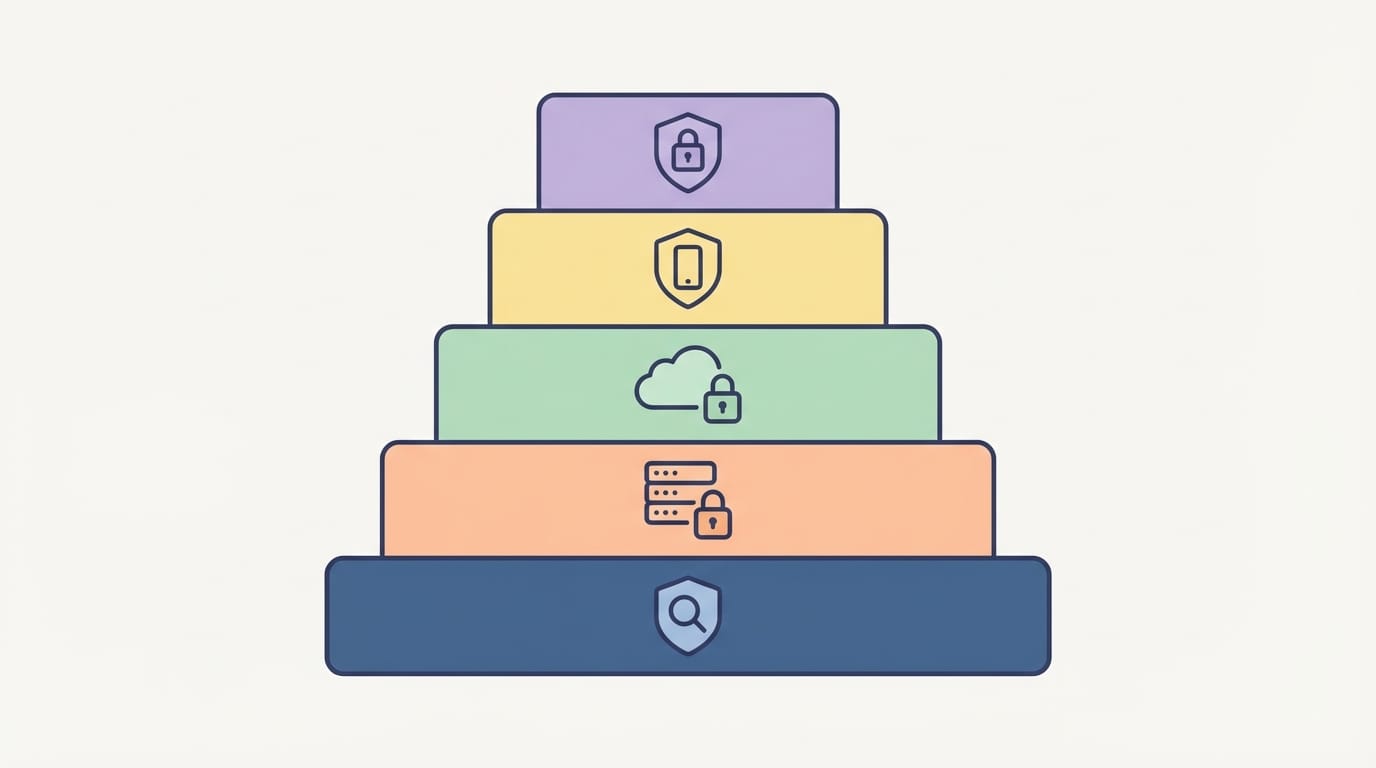
For decision-makers, security and performance are not just technical features; they reduce reputation risk, operational losses, and sales downtime. A practical approach: define requirement levels based on data sensitivity and sector, then build progressive, auditable controls.
Security: benchmark standards you can measure against
- Mobile application security verification: Standard OWASP MASVS It provides a clear checklist of what the app should cover (secure storage, authentication, encryption, tamper protection, etc.).
- Information Security Management System: If the organization needs a governance framework, the standard ISO/IEC 27001 is a common reference for defining ISMS requirements at the enterprise level.
- National compliance when applicable: Review NCA ECC as a minimum baseline of controls for technical assets, especially when dealing with entities/projects subject to specific requirements.
- Cybercrime: Understanding the legal framework helps design audit logs and incident response, such as Anti-Cyber Crime Law (MCIT).
Performance: what breaks first during growth?
- Backend APIs: Load-unfriendly design, or absence of caching.
- Database: Costly queries, missing indexes, or modeling that is not suitable for order scenarios.
- Notifications/background jobs: Congestion or uncontrolled retries.
- Attachments/images: Uploading images without compression/resizing leads to a slow experience and higher network costs.
Scalability: early architectural decisions reduce costs later
- Separate sensitive services (payments/orders) from secondary features when needed.
- Use queues for non-immediate operations (receipts, notifications, reports).
- Centralized monitoring (logs/metrics/tracing) with alerts on critical errors.
- Backup policy and recovery plan (Backup/DR) based on operational sensitivity.
Publishing platform policies: practically part of security
Privacy and disclosure requirements may affect how data is collected inside the app. Two useful examples for decision-makers: Apple's app data disclosure requirements, and Google Play policy updates that may change over time; review the page Policy announcement (Nov 19, 2025) as an example of changes that take effect on a specific date.
8) Common mistakes and how to avoid them
Many Mobile app development projects do not fail because the idea is bad; they fail due to execution mistakes that can be avoided with clear governance. Below are the most common mistakes companies make during contracting and execution - especially when searching for the best app development company without clearly defining success.
Mistakes in the selection phase
- Choosing based on price only: This usually leads to inflated change costs later due to weak analysis and testing.
- Lack of clear delivery criteria: Such as a requirements document, flow maps, definition of readiness, and a release plan.
- Not requesting operational examples: Such as: how is monitoring done? How are incidents managed? What is the release model?
Mistakes in the build phase
- Building everything at once: Instead of a well-scoped MVP with clear measurement goals.
- Integrations without a clear "contract": The absence of API documentation and data contracts leads to repeated failures whenever any change is made.
- Ignoring security early on: Then trying to "add security" right before launch is usually costly and painful.
- Not testing failure scenarios: Especially payments, weak network conditions, and retries.
Operational issues after launch
- No monitoring: No logs, no alerts, no dashboard, so outages become "surprises."
- No product owner: Priorities conflict and decisions get delayed.
- Neglecting platform updates: Changes in iOS/Android and store policies can affect stability and approval.
9) A practical step-by-step execution framework
The following framework helps you manage your mobile app development project as a business program, not as a set of development tasks. It can be applied whether you choose an app development company in Riyadh or a team in any city in Saudi Arabia.
Step 1: Define scope and outcomes
- Define 3-5 measurable success metrics (conversion, time, support tickets...).
- Define the top 2-3 critical flows (checkout, tracking, account).
- Set clear assumptions (coverage cities, payment methods, service levels).
Step 2: Design the user experience based on scenarios
- Flow maps with edge cases.
- Testable prototypes before final design.
- Define data principles: what we collect, why, and how we delete it upon request.
Step 3: Solution architecture and integrations
- Technology decision (Native/Cross-platform) based on complexity and speed.
- Design the API, data contracts (schema), and API versions.
- Plan environments (Dev/Staging/Prod), secret keys, and access management.
- If cloud is part of the solution, review market and regulatory requirements such as relevant CST regulations: Cloud Computing Services Provisioning Regulations.
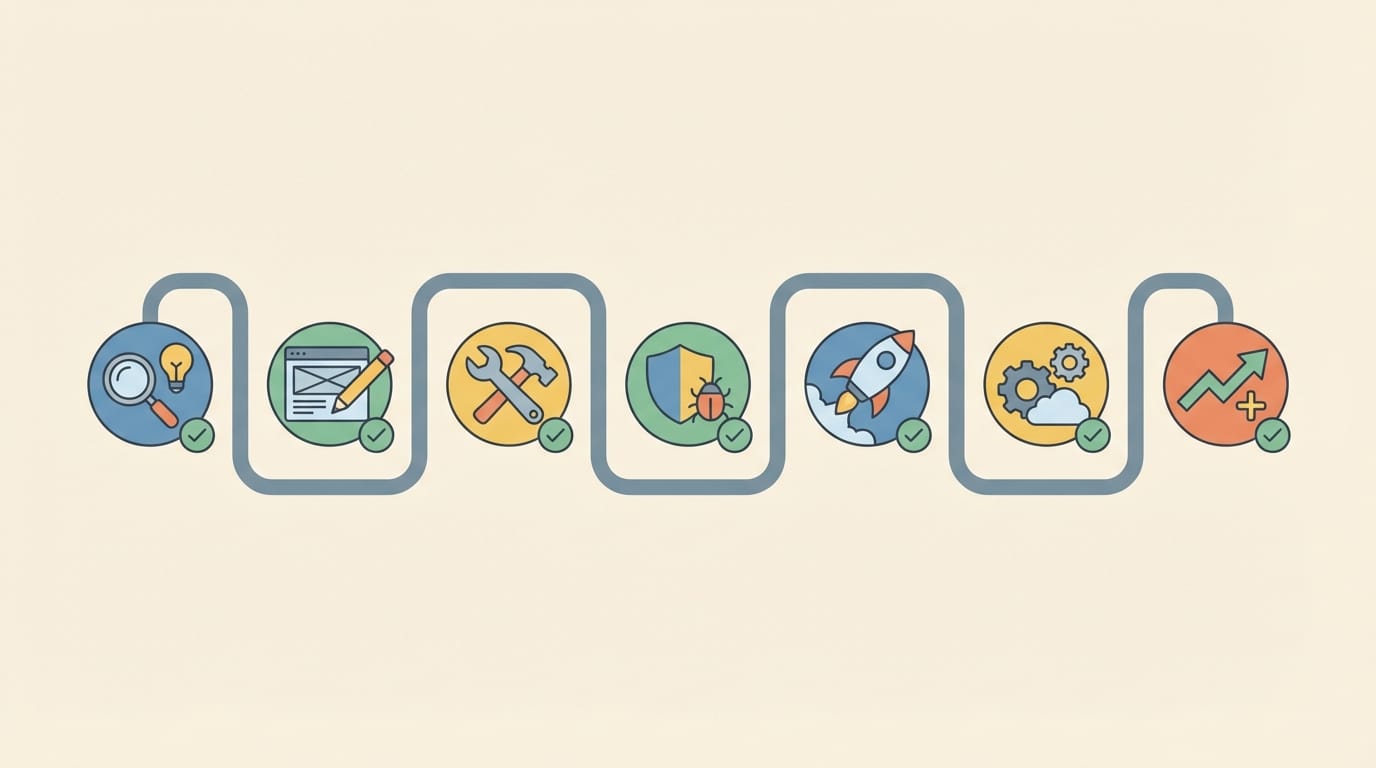
Step 4: Build the MVP with a steady delivery cadence
- Split work into short sprints with weekly outcome reviews.
- Basic automated tests plus manual testing for payment/registration flows.
- Prepare a "launch checklist" that includes performance, security, compliance, and store content.
Step 5: Launch and run
- Monitor crashes and performance with alerts.
- A product dashboard (funnel, payment failures, response time).
- A support plan for early releases: quick fixes and measured improvements.
Step 6: Continuous improvement (Grow)
- A/B tests where it makes sense (especially conversion flows).
- Manage tech debt regularly to avoid speed degradation.
- A quarterly roadmap that links development to business outcomes.
Within this framework, many organizations prefer relying on a professional service for companies that covers implementation and operations, with clear knowledge transfer to your internal team.
10) When is a custom solution the right choice
A custom solution is not always "better," but it becomes the right choice when your operational, integration, or security requirements go beyond what templates or off-the-shelf products provide. Below are practical indicators to help you decide.
Choose a custom solution if you have 3 or more of the following indicators:
- Complex integrations: Multi-branch ERP/CRM/POS, multiple delivery providers, or pricing/offers with complex rules.
- A distinctive customer experience is required: You need custom flows that reduce friction and increase conversion.
- Sensitive data/regulated sector: It requires stronger security and privacy controls, and possibly audit documentation.
- Scalable transaction volume: You expect rapid growth or seasonal peaks that require a scalable design.
- Long-term product ownership: You want control over the roadmap without the constraints of an off-the-shelf platform.
Off-the-shelf products may be sufficient if:
- The scope is simple and can be clearly measured without complex integrations.
- The priority is a very fast launch as a market test (with a later migration plan if the model succeeds).
- The organization currently does not have the capability to operate a continuous digital product.
Related articles
Latest articles related to mobile app design

App Development Company: MVP or Full Release, the Right Decision by Stage
In many Saudi companies, the issue is not the app idea but the timing of the decision: should we start with an MVP focused...

Best App Development Company in Riyadh: How to Compare Proposals Objectively
In Riyadh, the decision to contract a mobile app is no longer only a technical decision, but a decision about profitability, growth, and operations. Many projects...

Best App Development Company: A Practical Evaluation Framework for Business Owners
Choosing an app development partner is no longer only a technical decision, but an investment decision that directly affects revenue, operational efficiency, and customer experience....
Frequently Asked Questions (FAQ)
1) What are the main cost factors in mobile app development in Saudi Arabia?
The biggest cost drivers are usually: flow complexity (especially payments and orders), number of integrations (shipping/ERP/CRM), level of security and compliance, the presence of an admin dashboard, and post-launch operations requirements. The more sensitive the data, the greater the need for validation and testing controls, in line with obligations such as PDPL.
2) How long does it realistically take to deliver an MVP for a restaurant or e-commerce app?
The timeline depends on scope clarity and integrations, not just the number of screens. Analysis, design, integrations, and testing often consume time comparable to development itself. Setting a "launch checklist" that includes performance, security, and store requirements reduces rework later.
3) Is Native development better or Flutter/React Native?
The decision depends on feature complexity, performance sensitivity, and team expertise. Native suits higher performance and complex device features, while cross-platform may speed up launch if architecture and testing are well controlled. What matters most is engineering and operational quality, more than the technology name.
4) What is the minimum security baseline we should require from an app development company?
Ask for: encrypted communications, secure token storage, strong session management and authentication, basic tamper protection, and penetration testing/security review before launch. As a practical reference, you can use OWASP MASVS as a measurable checklist.
5) How do we ensure privacy and data protection compliance inside the app?
Start by defining only the necessary data, documenting the purpose, setting retention periods, controlling internal permissions, and providing a mechanism to handle data-related requests when needed. Review the general obligations framework in PDPL and make sure your design is aligned with it.
6) What are the most common integration failure points (payments/shipping/internal systems)?
The most common are: lack of a clear data contract, absence of a test environment matching production, and failure/recovery paths not being designed, especially in payments. On the payments side, requirements may be influenced by guidance from relevant authorities such as SAMA Rulebook.
7) Do we need an admin dashboard from day one?
Usually yes, if you have products/orders/offers/users that need management without daily technical intervention. You can launch an admin panel with a limited scope (order management, status, core content) and then expand it gradually. Its presence reduces pressure on the support team and improves operational response speed.
8) What risks should be managed contractually with an app development company?
The most important are: ownership of code and repositories, clear documentation and deliverables, quality and testing standards, knowledge transfer, and a post-launch operations plan. Also ensure clarity around compliance and security responsibilities, especially if reference controls such as NCA ECC apply to your environment.
9) How do we plan for scalability without inflating the budget?
Focus on low-cost decisions early: good API design, separating non-immediate processes via queues, monitoring and alerts, and performance testing for critical flows. Do not build a "giant architecture" from day one; build a foundation that can scale when real growth signals appear.
10) What might prevent app acceptance in the App Store or Google Play?
Common reasons: privacy violations or inaccurate data-collection disclosures, unjustified permissions, low quality/crashes, or content policy violations. Review disclosure requirements from Apple, and Google Play policy updates via the official announcements page.
Practical summary for choosing an app development company
When evaluating App development company, test its ability to: understand the business model, turn it into measurable flows, design stable integrations, build auditable security, and operate the product after launch. Ask "How do we manage failure?" as much as you ask "How do we build the feature?".
- Request documented deliverables: Requirements, flows, architecture, test plan, and deployment plan.
- Review integrations early: Payments/shipping/internal systems.
- Establish operational governance: Monitoring, alerts, and release management.
- Adopt security standards: Such as OWASP MASVS, and align privacy with PDPL when applicable.