
In Saudi Arabia and the Gulf countries, it is no longer company website design just an introductory interface; it has become a channel for operations, sales, customer service, and a trust touchpoint. This guide is aimed at decision-makers: business owners, executives, and operations managers who want to choose a website design company with awareness - understanding the technical options, their business impact, and the key risks and how to manage them.
Here you will find a practical framework that helps you make the right decision for the Saudi market (while considering privacy, security, and common integration requirements), without going into pricing details or exaggerated promises.
1) Defining the core concept
What is meant by a website design company In a corporate context, it is a team capable of delivering a website that serves business goals: clearly presenting services and products, generating leads, supporting sales, and enabling integration with internal systems - while ensuring performance, security, and future scalability.
What is the difference between a “beautiful website” and a “website that works”?
- The beautiful website: good visual design, but it may lack loading speed, content structure, or the ability to measure and optimize.
- The website that works: a clear user experience, intentional conversion paths, search-friendly structured content, measurement and analytics, and a technical foundation that allows scalability and integration.
Components of the modern corporate website
- Front-end layer: pages and user experience that provide excellent Arabic support (RTL) and are mobile-friendly.
- Management layer: a content control panel (CMS) or management through a custom system.
- Data and integration layer: integration with CRM, resource systems, payment gateways, shipping systems, and analytics tools.
- Governance layer: user permissions, tracking, activity logs, and backup procedures.
2) Available options and when to choose each option
You usually have three paths when searching for website design companies in Saudi Arabia: ready-made platforms, a customizable content management system, or fully custom development. Choosing the path depends on operational scale, required launch speed, and the nature of integrations.
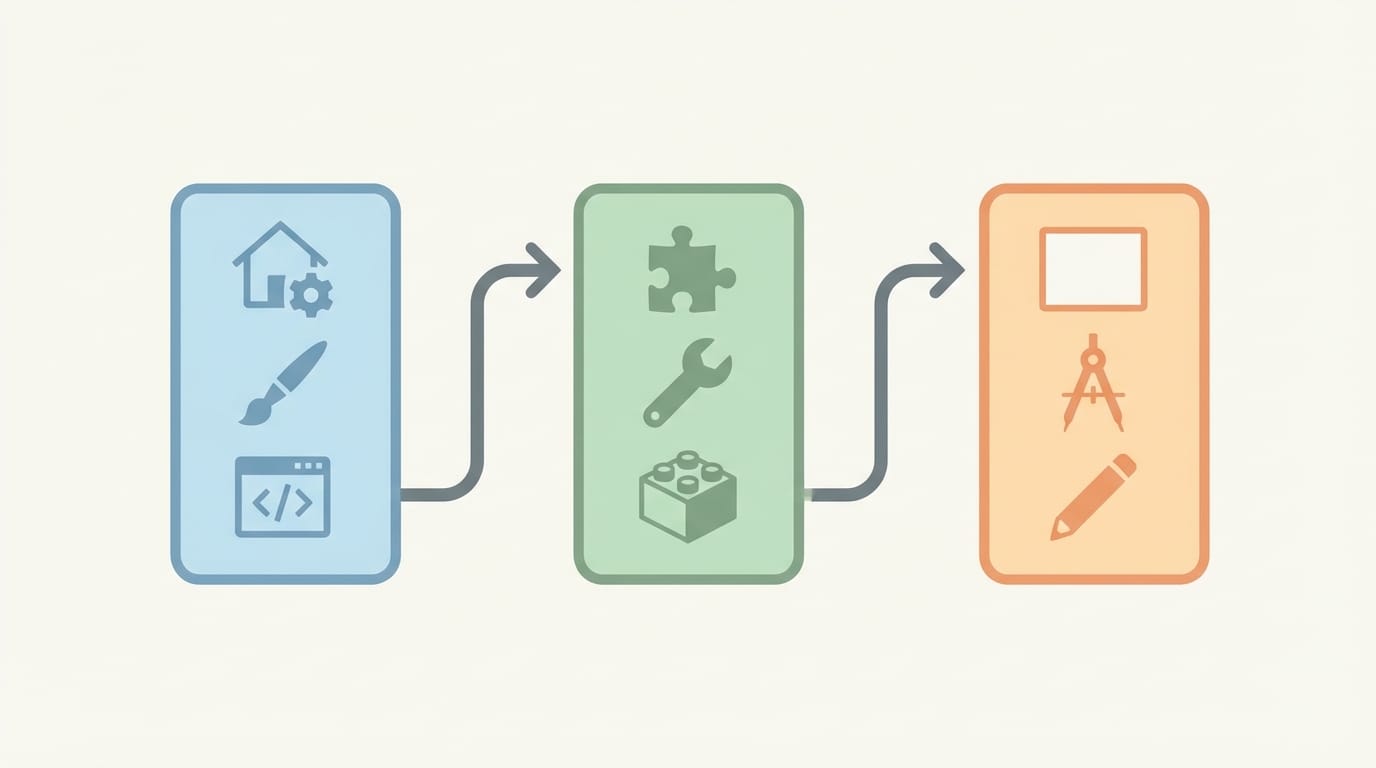
1) Ready-made platform (templates + plugins)
- When it suits you: a simple informational website, service pages, a contact form, without complex integrations.
- Advantages: faster launch, lower initial cost, easier content management.
- Limitations: limited flexibility; it may become more complex later as content grows or when a special experience or integrations are needed.
2) Customizable CMS + structured development
- When it suits you: suitable for content marketing, multiple sections, multilingual content, editorial teams, with some integrations.
- Advantages: a good balance between speed and flexibility, with scalability when the architecture is sound.
- Limitations: requires discipline in plugin usage, a solid hosting architecture, and update management.
3) Fully custom development (Custom)
- When it suits you: complex digital operations, customer portal, approval workflows, deep integrations with internal systems, and higher security/compliance requirements.
- Advantages: an experience designed around the process, long-term scalability, and full control over performance and security.
- Limitations: requires more precise planning, longer implementation time, and technical and operational governance.
Quick comparison table: ready-made platform vs customizable CMS vs custom development
| Item | Ready-made platform | Customizable CMS | Custom development |
|---|---|---|---|
| Launch speed | High | Medium to high | Medium |
| Flexibility | Limited | Good | Very high |
| Integration with systems | Limited. | Good depending on the design | Excellent |
| Governance and permissions | Basic | Advanced | As needed (fully customizable) |
| Operational risks | Increase with too many plugins | Acceptable with update management | Linked to team quality and documentation |
3) Business value and its impact on growth
When you choose Website design company in Saudi Arabia, ask: how will the website affect growth and operations? A good website shortens the sales cycle, improves lead quality, and reduces the burden of repeated inquiries through automated information and forms.
How do decision-makers measure return?
- Lead generation: qualified forms (smart fields) with automatic routing to teams.
- Conversion optimization: clear service pages, proof points, FAQs, and a request-for-quote/consultation path.
- Reducing operating costs: reducing unnecessary calls through a knowledge center and self-service interfaces.
- Scalability readiness: adding services/branches/languages without rebuilding.
Practical indicators you can track
- Conversion rate from visits to contact/request.
- Lead quality (by traffic source/service type).
- Core page load speed on mobile.
- Percentage of inquiries resolved through information/FAQ pages.
4) Most commonly used types and models
Many website design companies in Riyadh and Saudi Arabia implement repetitive models. Knowing the model you need reduces distraction and makes comparison fair.
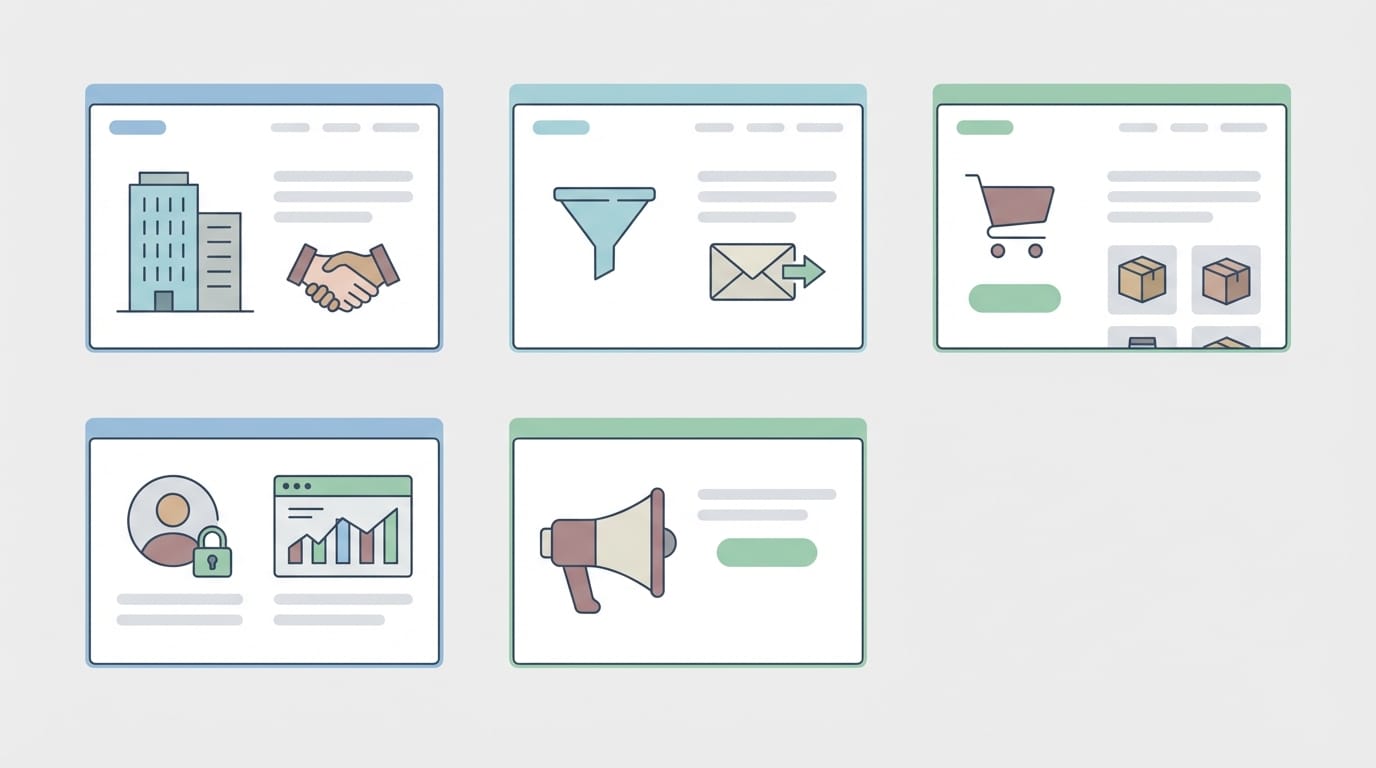
1) Corporate website (Corporate Website)
- Suitable for service companies, institutions, and traditional sectors.
- Focus: trust, structure, and ease of communication.
2) Lead generation website
- Suitable for high-value B2B services that rely on inquiries and consultations.
- Focus: in-depth service pages, qualified forms, and CRM integration.
3) E-commerce store
- Requires careful handling of integrations: payments, shipping, inventory management, and return policies.
- Focus: purchase experience, speed, trust, and compliance.
4) Client/partner portal
- Suitable for companies that provide after-sales services, maintenance contracts, or request management.
- Focus: permissions, workflows, records, and integration with internal systems.
5) Campaign pages (Landing Pages)
- Suitable for seasonal ad campaigns or launching new services.
- Focus: speed of build, message testing, and clear calls to action.
5) User experience and its impact on conversion
In most projects, the biggest gap between a "website that exists" and a "website that sells" is user experience. The decision here is not about taste; it is about reducing friction and increasing trust. This applies whether you are looking for the best web design company or an in-house development team.
User experience priorities for companies in Saudi Arabia
- Mobile-first: A large segment browses and decides via mobile, especially outside business hours.
- Offer clarity: What do you offer? For whom? What is the difference? How do you get started?
- Trust: Clear legal information and policies, multiple communication channels, and content that answers questions before they are asked.
- Language and direction: Professional Arabic (RTL) support, with the ability to switch to English when needed.
Practical elements that increase conversion
- Service pages built around "customer problems," not "internal descriptions."
- Smart short forms with context-based fields (instead of long generic forms).
- Decision-supporting content: use cases, FAQs, implementation steps, and service scope.
- Speed and clarity: reduce heavy animations and remove elements that distract from the goal.
Quick checklist for a successful service page
- A headline that communicates value within 5 seconds.
- 3-5 benefit points tied to business metrics.
- A "How we execute" section with clear steps.
- Service-specific FAQs.
- One or two contact calls to action at most, clear and not distracting.
6) Core integrations (payments, shipping, internal systems)
Integrations are where the differences between "web design" and "web development" actually appear. Many projects are delayed or fail because integrations are left to the last moment, or built without a clear data and responsibility model.
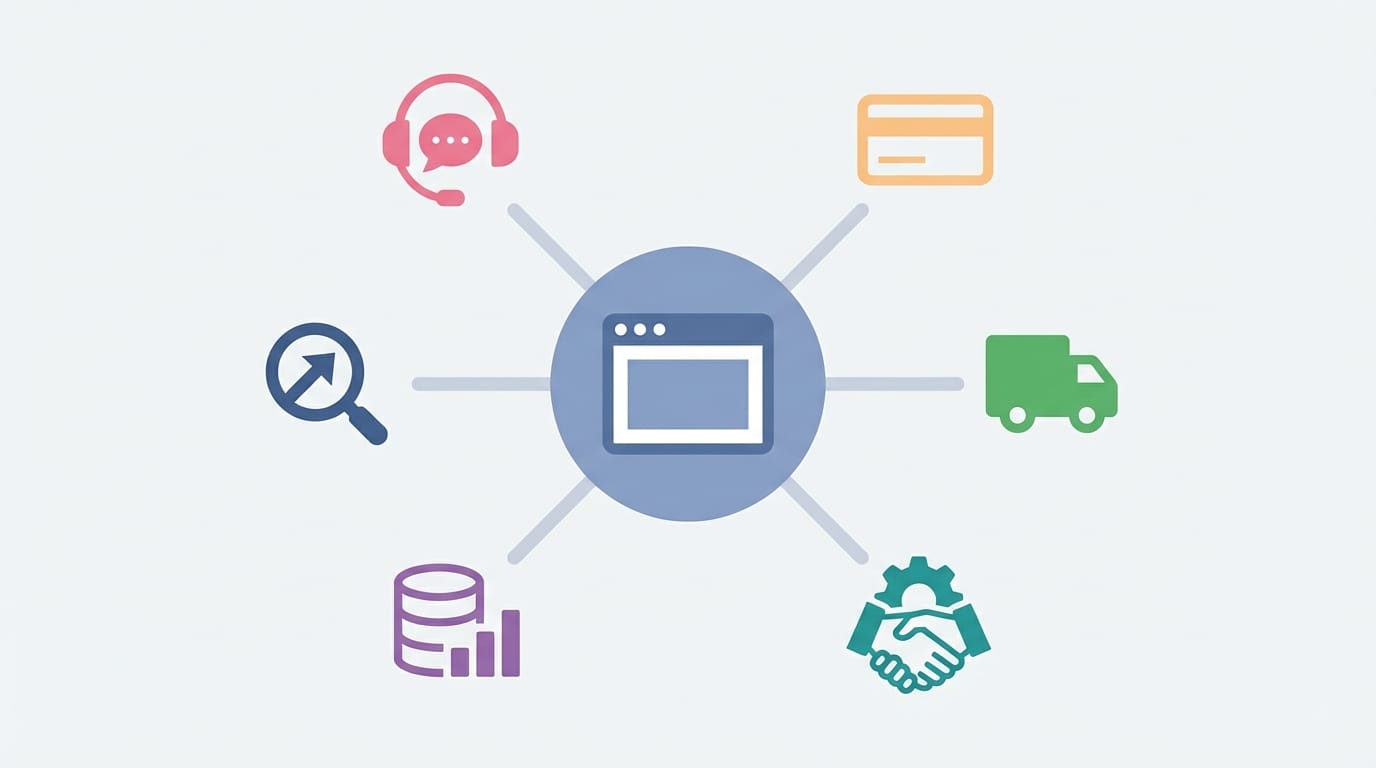
A) Payments (for e-commerce or fee collection)
- Choose a payment gateway suitable for the local market (supporting local networks and wallet options when needed).
- Reduce checkout steps and increase completion rate through a mobile-optimized experience.
- Compliance considerations: protect payment data and separate payment processing responsibilities from the website as much as possible.
B) Shipping and addresses
- Calculate shipping costs and delivery time by region, with clear display before payment.
- Integrate with shipping carriers to generate waybills and track shipments.
- Structured address management reduces delivery failures and increases customer satisfaction.
C) Internal systems (CRM/ERP/HR/Helpdesk)
- CRM: Converting form submissions into opportunities, automatic sales routing, and source tracking.
- ERP/Inventory: Sync products, quantities, and prices to prevent selling unavailable items.
- Support: Connect complaint and request forms to a ticketing system that ensures internal SLA compliance.
Comparison table: direct API integration vs integration middleware (iPaaS) vs manual integration
| Approach | When to use it | Strengths | Risks/limitations |
|---|---|---|---|
| Direct API integration | When there is a technical team and mature systems | Full control, good performance, customizable | Requires documentation, testing, and ongoing maintenance |
| Integration middleware (iPaaS/Workflow) | When systems are numerous and requirements change quickly | Faster connections, easier monitoring, flexibility across scenarios | Operational cost, vendor dependence, limits for some advanced cases |
| Manual integration/export and import | Temporary cases or low operation volume | Quick start without major technical build | Human errors, data delays, not suitable for growth |
7) Performance, security, and scalability
Performance and security are not "add-ons" after launch. In a fast-growing business environment like Saudi Arabia, the website must be ready for sudden traffic spikes (campaigns, seasons, news) and comply with privacy and data protection requirements.
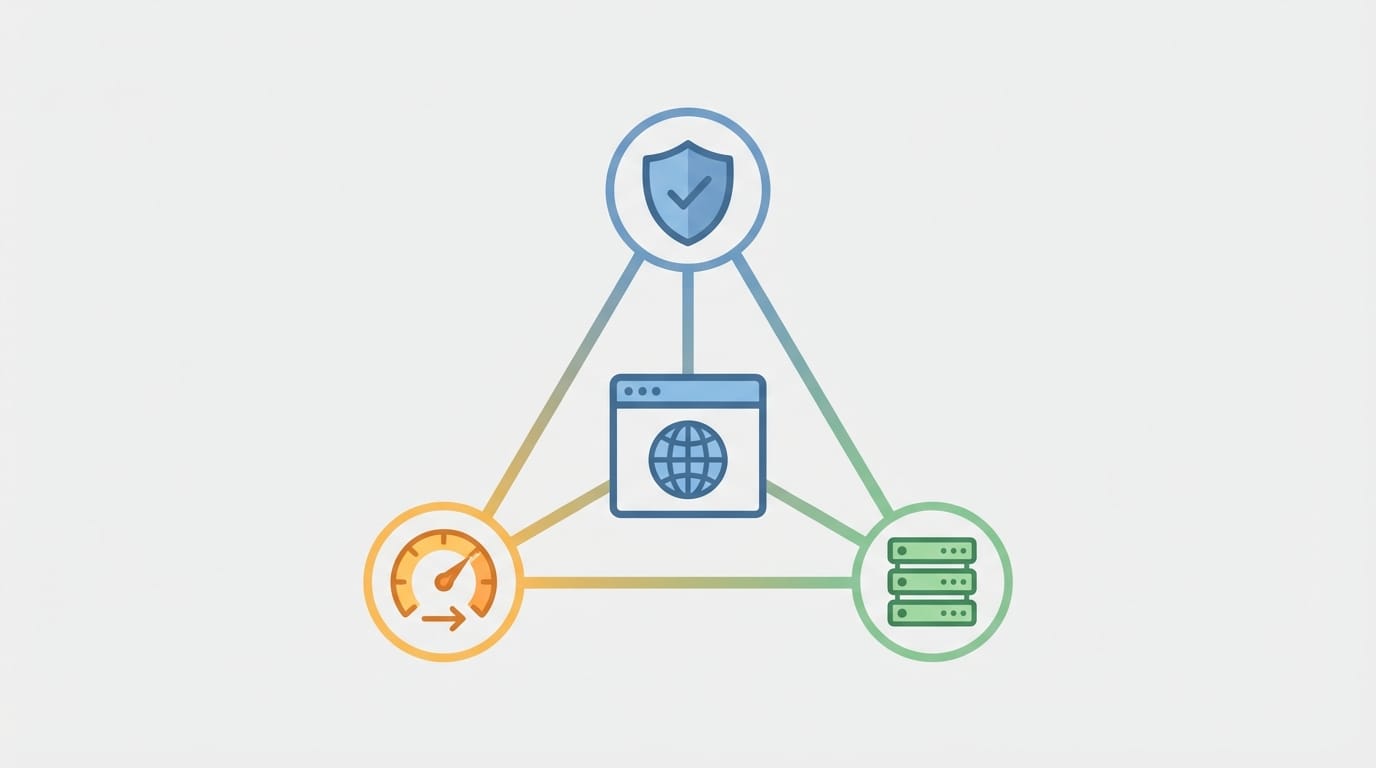
A) Performance: what actually matters?
- First-page load speed on mobile (especially service and product pages).
- Optimize images and assets, and reduce heavy plugins.
- Use caching and content delivery networks (CDNs) when needed.
- Monitor performance after launch, not just before launch.
B) Security: the minimum expected from any web design company
- HTTPS Mandatory, with standard security settings.
- Precise identity and permission management for editors and administrators.
- A clear update policy covering the core, plugins, and servers.
- Regular, restorable backups, with actual restoration testing (having backups alone is not enough).
- Protect forms from spam and common attacks.
C) Privacy and compliance: what should the scope of work include?
- Privacy policy and terms of use pages (worded to match your business activity).
- Collect the minimum necessary data in forms (Data Minimization) and tie it to the purpose.
- Data access controls, especially when integrating CRM or internal systems.
- Cross-border data transfer considerations when using cloud services/marketing tools.
D) Scalability: where do websites usually struggle?
- Relying on too many plugins without governance (each plugin becomes a failure point).
- Lack of a development/testing environment separate from production.
- Lack of documentation: when changing vendors, costs become higher.
- A content structure that cannot scale (weak taxonomy, duplicate pages, messy links).
8) Common mistakes and how to avoid them
Many web development Projects stall not because of the technology itself, but because of unclear expectations and weak governance. These are the most common mistakes when dealing with web design company in Riyadh or any other city.
Scope and contracting mistakes
- Undefined scope: "We want a professional website" without defining pages, forms, integrations, and content responsibilities.
- Delivery without documentation: No administration guide, no integration documentation, and no page maps.
- Neglecting operations after launchThere is no clear agreement on maintenance, updates, and monitoring.
Design and user experience mistakes
- A design built on internal taste, not the customer journey.
- Too many scattered calls to action on a single page.
- Weak Arabic copy, or an unsuitable literal translation.
Technical mistakes that affect growth
- Choosing cheap hosting that cannot handle peak seasons.
- Scaling later without a data structure (such as turning a brochure site into a store without database design).
- Incorrect tracking and analytics: marketing decisions become based on incomplete data.
How do you avoid these mistakes?
- Request a detailed scope of work (SOW) document before implementation starts.
- Define "success" as measurable indicators (speed, conversion, working integrations, ready content).
- Require a staging environment, a launch plan, and a post-launch support plan.
9) A practical step-by-step execution framework
This is a practical framework you can use with any Website design company in Saudi Arabia to ensure the project is deliverable and operational, not just design files.
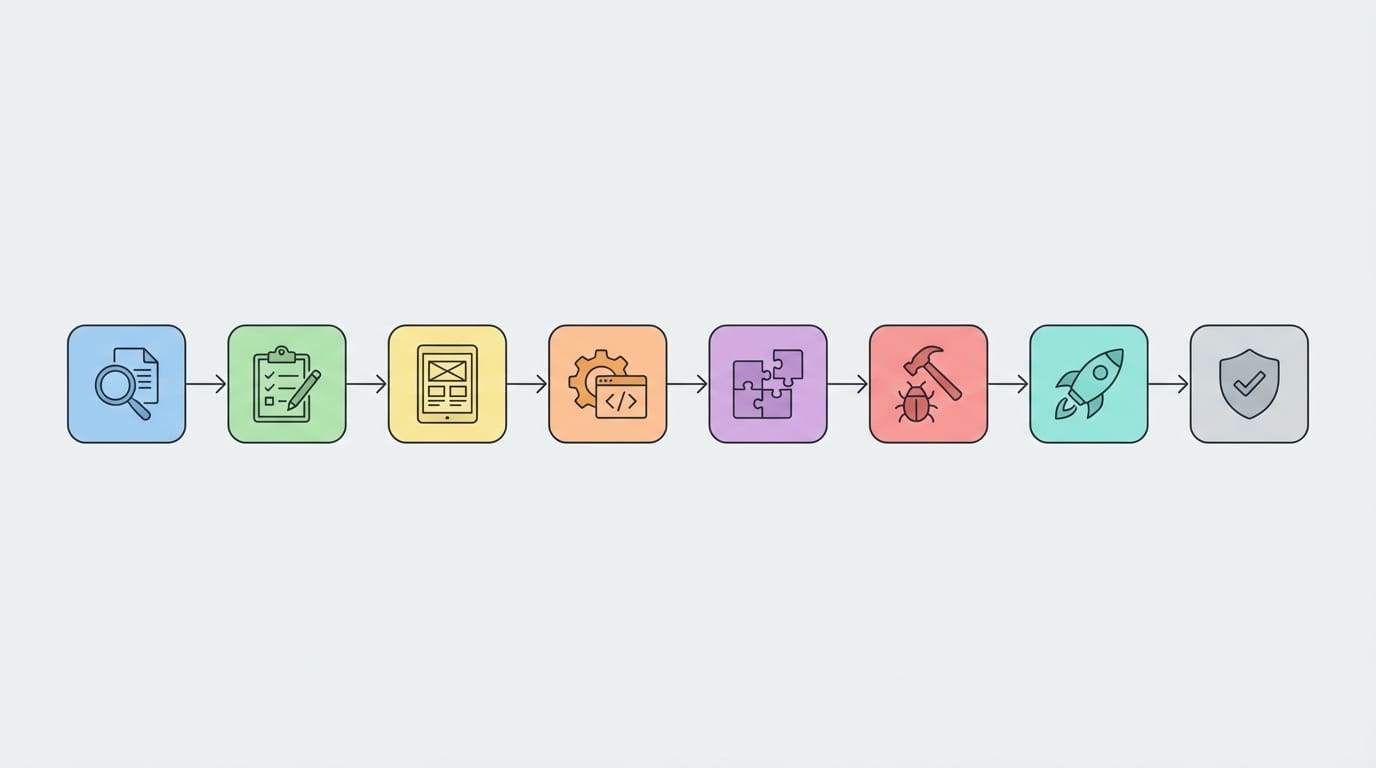
Step 1: Define the goal and website scope
- What is the main objective? (branding/lead generation/sales/portal)
- Who is the audience? (B2B, B2C, suppliers, partners)
- What are the core pages? And what will be managed through the CMS?
Step 2: Gather requirements and integrations
- Identify the systems the site will integrate with: CRM, ERP, payment gateway, shipping, support.
- Define who owns the data (Data Owner) and who relies on it (Data Consumer).
- Set failure scenarios: what happens if the external system goes down?
Step 3: User experience and content structure
- A sitemap with a clear structure for service pages.
- Customer journey models: from ad/search -> service page -> proof -> contact.
- A professional Arabic content plan that reflects the local market language.
Step 4: UI design and prototypes
- Approve prototypes for critical pages before polishing visual details.
- Validate mobile first, then larger screens.
- Standardize interface components to reduce complexity and speed up development.
Step 5: Development and testing
- Iterative development with regular sprint reviews instead of a "single final handoff."
- Test performance, baseline security, and the validity of links and forms.
- Test payment/shipping/CRM integrations in a staging environment.
Step 6: Launch and operations
- A launch plan should include backups, monitoring, and a rollback plan when needed.
- Set up analytics, events, and a simplified dashboard.
- Train the team on content management and permissions.
10) When is a custom solution the right choice
Not every project needs a custom solution. But at a certain point, custom development becomes the most rational choice, not because it is "fancier," but because it reduces operational risks and addresses requirements that themes and plugins do not cover.
Clear signs that a custom solution is suitable
- You have operations that must be reflected in the website: approvals, customer-based pricing, a contracts portal, or files.
- You need deep integrations with internal systems or with more than one system at the same time.
- You need Granular permissions and multiple roles (customers/partners/employees) with logs.
- Requirements security and compliance that are higher than usual (depending on the nature of the sector and data).
- You are planning rapid growth: new markets, branches, or many products that require a data structure from day one.
When is it not suitable?
- If the goal is simple brand presence and there is no clear content or operations team.
- If requirements are highly unstable (it is better to launch an organized MVP first, then expand).
- If no operational budget is allocated for post-launch maintenance and monitoring.
How do you evaluate "custom readiness" without complexity?
- Write 10 "what happens when..." scenarios (register/order/cancel/payment/inquiry/shipping issue).
- Identify sensitive data and who will have access to it.
- Calculate opportunity cost: how much do downtime or manual work cost you monthly?
Related articles
Latest articles related to website design

Website Development Company: When do you need custom website development instead of templates?
The decision to build a new website in the Saudi market is no longer just a visual decision; it is a business decision that affects revenue, speed of operations, and management…
Best Website Design Company: 10 questions to ask before signing the contract
Choosing a digital partner to build the company website is no longer a formal decision in Saudi Arabia, especially for business owners and executive teams that tie the website…

Website Design Company in Saudi Arabia: What should the technical proposal include?
Choosing the technical partner for the company website is not a formal decision; it is an operational decision that affects sales, the quality of business opportunities, and marketing team efficiency…
Frequently Asked Questions (FAQ)
- 1) What factors affect the cost of implementing a company website in Saudi Arabia without quoting fixed prices?
- The main cost drivers are: number of pages and templates, level of UX customization, number of integrations (CRM/ERP/payment/shipping), security and compliance requirements, multiple languages, and the amount of content to be produced or migrated, in addition to the level of testing and the post-launch operations plan.
- 2) How long does it usually take to implement a company website from scratch to launch?
- That depends on requirement clarity and the readiness of content and integrations. Simple projects are completed faster, while projects with integrations, systems, permissions, and legal reviews need more time. What matters most is a clear phased plan (a launchable first version, then improvements).
- 3) How do I choose between a ready-made platform, CMS, and custom development?
- If your goal is simple company presence, a ready-made path may be enough. If you need content scalability and solid customization, CMS is suitable. If you have deep processes, integrations, and multiple permissions, custom development is usually best.
- 4) What should I request from a web design company to ensure quality?
- Request: a clear scope document, prototypes for critical pages, a test plan, integration documentation, a maintenance and updates policy, and a measurement mechanism (Analytics/Events) after launch, in addition to handover of admin access, files, and documentation.
- 5) What are the most important integrations companies in Saudi Arabia usually need?
- It depends on the business, but the most common are: CRM for lead management, a payment gateway for online payments when needed, shipping integration for stores, and customer support systems. In larger companies, ERP, inventory, contract management, and internal portal integrations appear.
- 6) How do I make sure the website can scale later?
- Look for: organized content architecture (taxonomies and templates), reduced reliance on random plugins, a testing environment, documentation, and performance/monitoring metrics. Most importantly: design data and integrations so they can expand without rebuilding.
- 7) What is the minimum security baseline any company website should have?
- HTTPS, clear access control, restorable backups, regular updates, form protection, and login-attempt monitoring. If the site collects sensitive data or integrates with critical systems, controls and testing should be strengthened in proportion to risk.
- 8) How do we handle privacy and data protection in forms and analytics?
- Collect only the minimum data needed for the purpose, clearly inform users of policies, and enable internal data access controls. When using analytics or marketing tools, verify data-sharing settings and their alignment with your privacy policy and company procedures.
- 9) What are the most common delivery risks in website development projects, and how do we reduce them?
- Key risks: scope changes, content delays, integration complexity, and weak testing. They are reduced through clear governance, a phased plan, regular reviews, scope documentation, and defined responsibilities for both sides (who writes content? who provides system data? who approves designs?).
- 10) Do I need a post-launch maintenance and operations contract? What should it include?
- Usually yes, because a website is a living system. It typically includes security updates, uptime/performance monitoring, backups and restore testing, incident handling, and agreed minor improvements. Without operations, the site becomes a burden over time.